Looking for a home near the water in Pasadena can feel exciting and a little complicated at the same time. You may be dreaming about boat days, sunset views, or easy access to the bay, but the right fit depends on more than the shoreline itself. If you want to buy with confidence, it helps to understand how waterfront, water-access, and marina-adjacent living really work in Pasadena. Let’s dive in.
Pasadena waterfront living is not one market
Pasadena’s near-water housing is shaped by the Magothy River watershed, along with shoreline areas connected to the Patapsco River, Rock Creek, and the Chesapeake Bay. That means the lifestyle, access, and ownership details can vary a lot from one part of Pasadena to another.
You will also find a wide mix of community settings in the area. Anne Arundel County identifies Pasadena-area communities such as Bayside Beach, Chelsea Beach, Green Haven, High Point, Rock Hill Beach, Rockview Beach and Riviera Isles, Venice on the Bay, and Water Oak Cove. Separate county community pages also describe Hunters Harbor as a water-oriented neighborhood on the Magothy River, Venice on the Bay as a waterfront or water-privileged community, and Riviera Beach as a residential waterfront community.
For buyers, the big takeaway is simple. A home near the water in Pasadena does not always mean the same thing. Some properties are true waterfront lots, while others may offer shared access, marina proximity, or community amenities tied to the shoreline.
Know the difference in water access
One of the most important questions you can ask is what kind of water access comes with the property. That answer affects both your lifestyle and your long-term costs.
Anne Arundel County says a waterfront lot is one that abuts the mean high-water line, or land owned by an HOA or the County that has the right to function as a waterfront lot. In plain terms, that means a property may qualify as waterfront because it directly borders the water, or because it includes a legally recognized relationship to waterfront land.
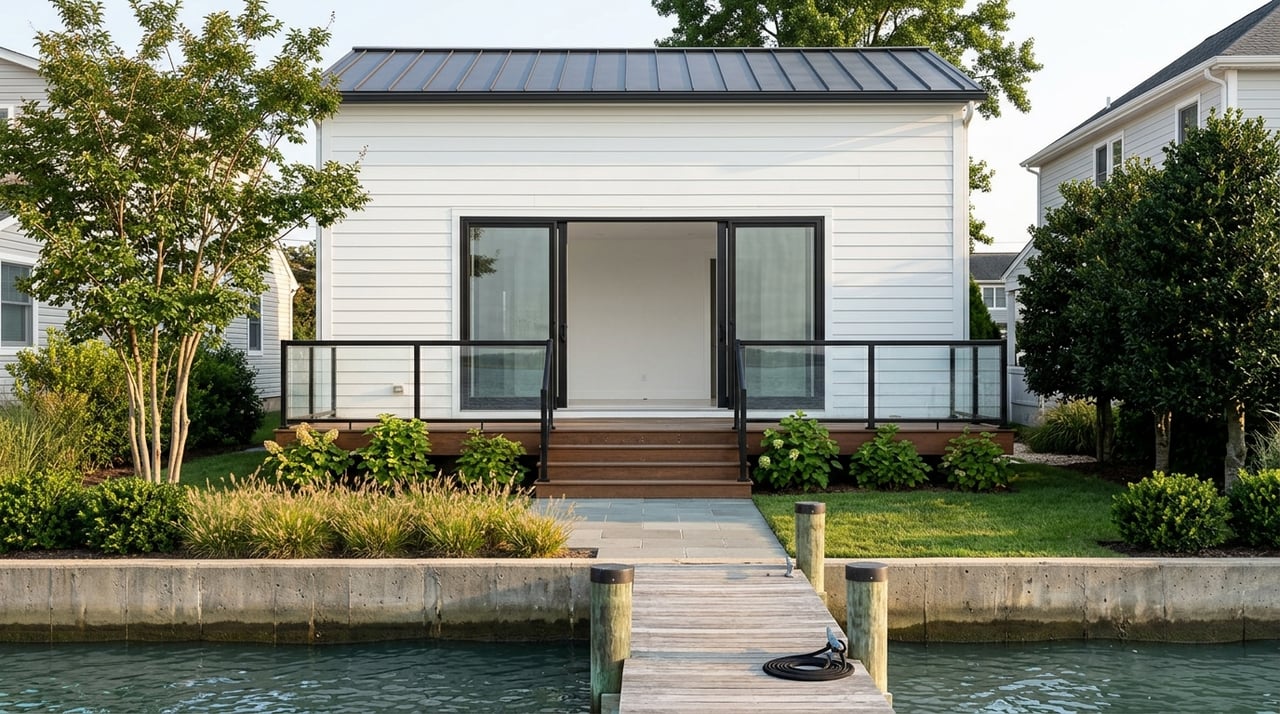
A water-access or water-privileged home is different. In many Pasadena communities, you may have access to shared shoreline features like a community pier, beach, ramp, or launch area without owning the actual waterfront edge yourself.
That distinction matters because access rights are not automatic. The county states that only owners or occupants, guests, or people with a recorded agreement may dock or moor at a private pier. If a home does not include its own private pier, you will want to verify whether the deed, easement, HOA documents, or marina arrangement gives you any legal docking rights.
Questions to ask about access
Before you write an offer, it is smart to confirm:
- Whether the lot is true waterfront or community water-access
- Whether a private pier is included with the property
- Whether a slip, mooring right, or launch use is deeded or assigned
- Whether the HOA controls shoreline access and amenity use
- Whether guests can use the pier, ramp, or beach
- Whether there are recorded agreements tied to docking or mooring
Public water access adds lifestyle value
Even if a home does not come with a private pier, Pasadena still offers meaningful public access to the water. Anne Arundel County highlights its Parks & Water Access system as a major local asset, and that can make a big difference in your day-to-day experience.
Fort Smallwood Park is one of the area’s best-known waterfront destinations. The county says it offers a boat ramp, a long fishing pier, swimming, and trail and beach amenities. Downs Park adds a fishing pier, a cartop launch at Locust Cove, trails, and a bayfront setting.
Beachwood Park is another Pasadena option with a cartop boat launch, fishing, trails, and natural-area access. The county also includes Green Haven Wharf on its cartop-launch list in Pasadena. For buyers who want kayaking, fishing, or quick water access without full waterfront ownership, these nearby public amenities can be a major plus.
Marina access may be part of the equation
For some buyers, the best setup is not a private dock at all. It may be easier and more practical to live near the water and keep a boat at a marina.
Anne Arundel County’s marina inventory lists Pasadena-area facilities such as Pasadena Boatel and Beach Club, Pasadena Yacht Yard, Magothy Marina, and Atlantic Marina on the Magothy. Current marina information also describes Magothy Marina on Gray’s Creek and notes wet slips on the Magothy and Patapsco rivers.
This matters because marina-adjacent living can offer flexibility. You may be able to separate your housing search from your boating needs, which can widen your options and help you compare homes based on layout, condition, and location rather than focusing only on private dockage.
Shoreline ownership comes with rules
Waterfront living can be beautiful, but it also comes with added responsibility. Anne Arundel County’s Waterfront Homeowners Guide explains that waterfront ownership involves managing upland, wetland, and water areas, not just the visible yard.
The county also notes that Anne Arundel has more than 533 miles of shoreline. Because so much local property interacts with sensitive shoreline conditions, rules around maintenance and improvements are often stricter than buyers expect.
One of the biggest factors is the Chesapeake Bay Critical Area. According to the county, this area extends 1,000 feet inland from tidal waters, and the 100-foot buffer nearest the shoreline has tighter limits on grading, clearing, and vegetation changes.
That means a waterfront lot may offer amazing potential, but not every project will be simple. If you are thinking about changing landscaping, removing vegetation, improving views, or adding shoreline features, you should understand the approval process before you buy.
Common projects that may require review
County guidance indicates that buyers should look closely at permitting for:
- Shoreline stabilization
- Seawalls
- Bulkheads
- Revetments
- Soil disturbance in the Critical Area
- Vegetation changes near the shoreline
Maryland’s Department of the Environment says living shorelines are the preferred shoreline-protection method because they can help trap sediment, filter pollution, and reduce erosion. That does not mean every lot will have the same solution, but it does show how environmental rules and property planning often go hand in hand.
Maintenance costs can go beyond the view
When you buy near the water, the monthly budget should include more than mortgage, taxes, and utilities. The county’s waterfront guidance makes clear that site upkeep can be a meaningful part of ownership.
For example, some waterfront homeowners in Anne Arundel County still use septic systems, while others have public sewer service. That alone can affect inspection priorities, maintenance planning, and future costs.
The county also recommends careful stormwater management and limiting pesticides and fertilizers because runoff reaches the water quickly. In real life, that means you may need to think more intentionally about drainage, landscaping, and ongoing exterior maintenance than you would at a similar home farther inland.
Ask these ownership questions early
As you compare homes, try to confirm:
- Whether the property is on septic or public sewer
- Who maintains the shoreline edge or shared waterfront area
- Whether the HOA maintains piers, ramps, or beaches
- Whether past shoreline work was completed with approval
- Whether erosion or drainage issues have been addressed
Flood insurance can change your payment
One of the biggest surprises for waterfront buyers is insurance. Maryland’s Insurance Administration says most standard homeowners and renters policies do not cover flood damage.
Maryland law also requires insurers to provide written notice when a homeowners policy is first purchased stating that standard homeowners coverage does not cover flood losses. That is an important reminder to ask direct questions instead of assuming your main policy covers everything.
Flood coverage can also affect your monthly housing cost. The NFIP treats building coverage and contents coverage as separate policies, so buyers should understand what is covered and what is not.
If the home is in a Special Flood Hazard Area, lender rules may require flood insurance for certain loans. A practical buyer conversation should include whether flood coverage will be required, whether a private flood policy is acceptable, and whether the lender will escrow the premium.
A smart buying strategy for Pasadena waterfront homes
Buying near the water in Pasadena is often less about moving fast and more about asking the right questions. The best purchase is not always the one with the best photo. It is the one where the access rights, condition, insurance picture, and maintenance responsibilities all make sense for your goals.
A thoughtful search usually starts by narrowing down your preferred lifestyle. You may want true waterfront privacy, a water-privileged community with shared amenities, or a marina-oriented setup that gives you more flexibility.
From there, focus on the ownership details that are easiest to miss. Review whether access is deeded, whether shoreline structures are permitted, whether the home uses septic or sewer, and how flood insurance may affect affordability.
That kind of due diligence can protect both your budget and your peace of mind. It also helps you compare homes more accurately across Pasadena’s many shoreline communities.
If you are exploring homes near the water in Pasadena, working with a local advisor who understands how lifestyle and property details intersect can make the process much smoother. When you are ready for tailored guidance on neighborhoods, access, and the full ownership picture, connect with V.V. Parker.
FAQs
What does waterfront mean for a Pasadena home?
- In Anne Arundel County, a waterfront lot is one that abuts the mean high-water line, or land owned by an HOA or the County that has the right to function as a waterfront lot.
What is the difference between a waterfront home and a water-access home in Pasadena?
- A waterfront home has a direct legal relationship to the shoreline, while a water-access home may offer shared use of features like a community pier, beach, ramp, or launch area without owning the waterfront edge.
Can you dock a boat at a Pasadena property without a private pier?
- Possibly, but docking or mooring rights depend on the deed, recorded agreements, HOA rules, or marina arrangements, since the county says only authorized owners, occupants, guests, or people with a recorded agreement may use a private pier for docking or mooring.
What public water access options are available in Pasadena, MD?
- Anne Arundel County highlights Fort Smallwood Park, Downs Park, Beachwood Park, and Green Haven Wharf for water access features such as ramps, cartop launches, fishing piers, trails, beaches, and related recreation.
What permits are common for shoreline changes in Pasadena?
- Buyers should expect review or permitting questions around shoreline stabilization, seawalls, bulkheads, revetments, soil disturbance, and vegetation changes, especially within the Chesapeake Bay Critical Area.
How does flood insurance affect buying a home near the water in Pasadena?
- Most standard homeowners policies do not cover flood damage, and if the property is in a Special Flood Hazard Area, your lender may require flood insurance, which can increase your monthly housing costs.
Should you ask whether a Pasadena waterfront home uses septic or sewer?
- Yes, because Anne Arundel County notes that some waterfront homes use septic while others have public sewer service, and that difference can affect inspections, maintenance, and long-term ownership costs.