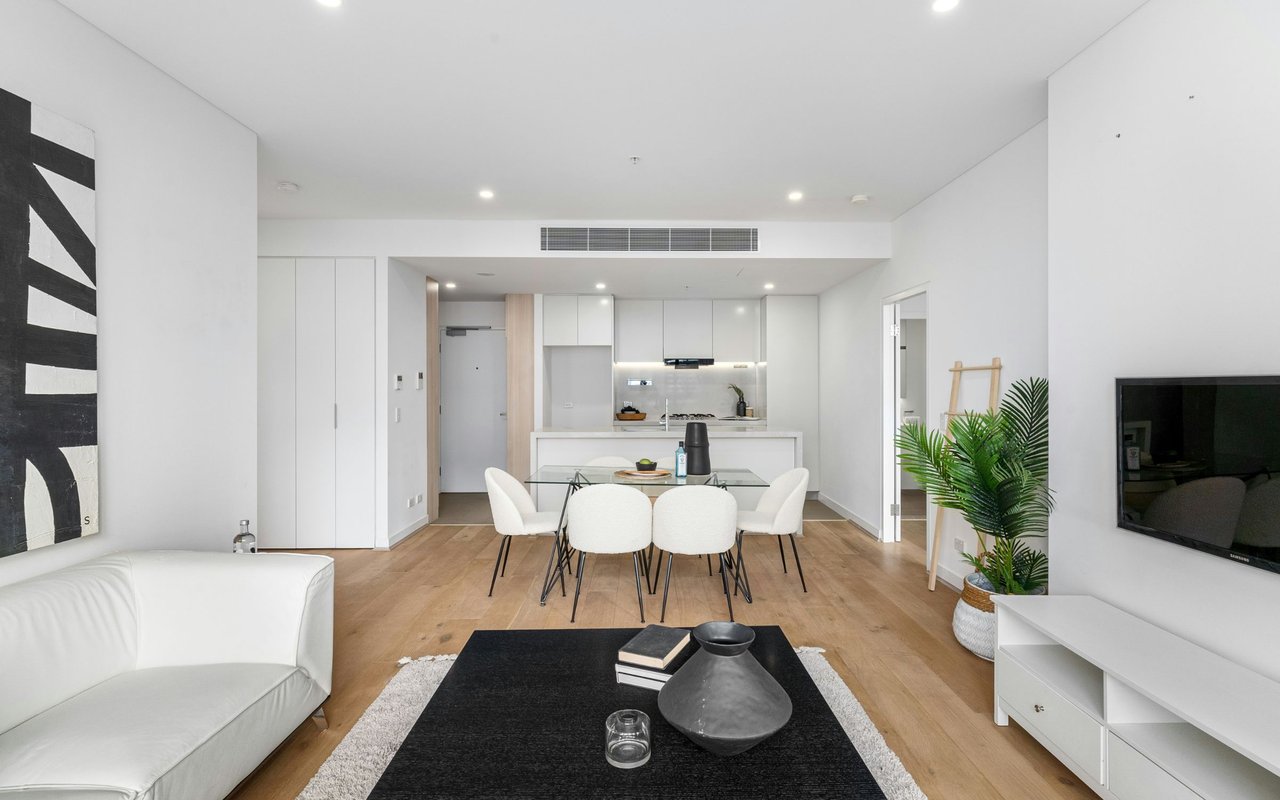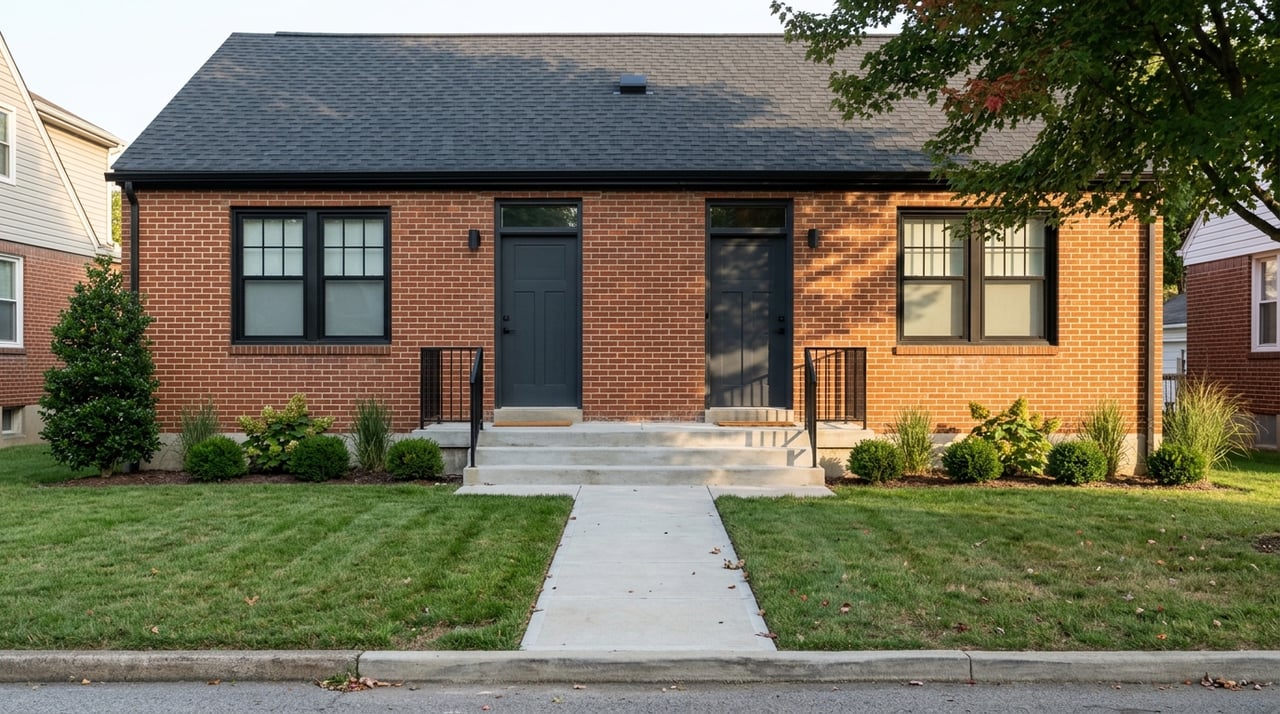
If you are looking at investment property in Sykesville, the biggest mistake is assuming a small-town market will be simple. In reality, this is a mostly owner-occupied market with limited rental supply, relatively high home prices, and a narrow margin for error if you buy the wrong property. The good news is that when you know what to screen for, you can evaluate deals with much more confidence. Let’s dive in.
Why Sykesville draws investor attention
Sykesville is a small incorporated town, with 4,491 residents and 1,597 housing units according to Census Reporter’s local profile. It is also a predominantly owner-occupied market, with 77.5% owner-occupied housing and 22.5% renter-occupied housing. That matters because investors are not shopping in a heavily rental-driven environment.
At the same time, several indicators suggest steady housing demand. The Maryland ACS profile for Sykesville shows a median household income of $139,556, low family poverty, and a 30.8-minute mean commute. It also shows that 85.2% of workers drive alone and 10.2% work from home, which points to a commuter-oriented suburban market with established households.
For buyers, the headline is simple: Sykesville can offer stability, but it is not a market where you can ignore pricing discipline. Realtor.com’s local market snapshot places the median listing price at about $542,492, with median rent around $2,004 per month, and classifies the area as a seller’s market. In a market like that, savvy investors focus less on hype and more on fit, condition, and realistic income.
What smart buyers look for first
The most practical starting point is property type. Sykesville’s housing stock is dominated by single-family homes and attached homes, not large apartment inventory. In the ACS data, 53.4% of homes are 1-unit detached and 31.5% are 1-unit attached, while small multifamily stock is limited.
That shapes what many investors pursue. Instead of chasing rare inventory that may not pencil out, many buyers focus on homes that match the town’s existing housing profile and long-term demand patterns. In Sykesville, that often means a detached home or townhome with a layout that appeals to stable, longer-term renters.
Focus on 3- and 4-bedroom layouts
One of the clearest signals in Sykesville is bedroom count. The ACS profile shows that 38.5% of homes have 3 bedrooms and 30.2% have 4 bedrooms, while smaller 1- and 2-bedroom units make up a much smaller share of the housing stock. That means larger layouts are more aligned with the local market.
For an investor, this matters because demand is not only about rent. It is also about whether the property fits what local households are already choosing and staying in. The same data set suggests a stable housing base, with only 2.4% of residents moving in 2023 or later, so it makes sense to prioritize homes that support long-term occupancy over quick turnover.
Household composition points in the same direction. According to Maryland’s 2020 Census place profile for Sykesville, 34.2% of households include children under 18, and 27.3% include someone age 65 or older. For investors, that mix can support interest in practical, comfortable homes that work well for longer-term living.
Watch the rent-to-price relationship
This is where savvy buying becomes critical. Sykesville’s rent levels are solid for a town of its size, but purchase prices are also elevated. The ACS places median gross rent at $1,828, while Realtor.com’s current market snapshot shows median rent at roughly $2,004 per month.
At the same time, owner-occupied values are not low. The ACS reports a median owner-occupied home value of $453,400, with 53.1% of homes in the $300,000 to $499,999 range and 39.2% in the $500,000 to $999,999 range. When current listings hover in the mid-$500,000s, you need to ask a simple question: can this property support realistic rent without a renovation budget that wipes out the return?
That is why experienced buyers often avoid stretching just to win a deal in a seller’s market. A property that needs modest updates may create opportunity. A property that needs major system work, layout correction, permit cleanup, and code upgrades can quickly become a very different investment.
Look for manageable value-add potential
Not every fixer is a smart buy. In Sykesville, the best opportunities are often properties with manageable deferred maintenance rather than major unknowns. That distinction matters because a value-add strategy only works when your timeline, permit path, and renovation scope stay under control.
Age is part of that equation. The ACS data shows that about 23.9% of Sykesville homes were built before 1980, while large portions of the housing stock were built in the 1980s and 1990s. Older homes may offer upside, but they also increase the importance of detailed inspections, realistic contractor pricing, and reserve planning.
A practical investor screen includes:
- Functional 3- or 4-bedroom layout
- Enough parking for daily household use
- Limited structural or systems risk
- Exterior and interior updates that are cosmetic or straightforward
- Clear ownership and permit history
- Rent potential that aligns with local market benchmarks
Understand permits before you close
In a small town, local process can matter as much as property condition. The Town of Sykesville Planning Department notes that many improvements require permits from both the Town of Sykesville and Carroll County. If a property sits in the Sykesville Historic District, it may also require Historic District Commission review.
For investors, this is a major due diligence issue. A project that seems simple on paper can become slower and more expensive if prior work was unpermitted or if proposed exterior changes trigger additional approvals. Before you commit to a rehab plan, confirm what was done, what is allowed, and which jurisdiction needs to sign off.
Carroll County also adopted newer building codes effective January 1, 2024. If you are expanding, adding units, or significantly repositioning a property, code compliance and potential impact fees should be part of your upfront underwriting, not an afterthought.
Check impact fees and holding costs
For some investors, the purchase price gets all the attention. In practice, holding costs and municipal requirements can shape the deal just as much. Carroll County’s published fee schedule includes impact fees for new dwelling units, including $3,533 for single-family, $3,944 for townhouse, and $1,600 for multi-family units.
You should also account for local taxes. Sykesville’s FY2025-2026 town real property tax rate is listed at $0.32 per $100 of assessed value, and the town notes that Carroll County handles real estate tax billing. That means you will want to verify carrying costs at both the town and county level when comparing projected returns.
Don’t overlook lead-safety rules
If you are evaluating older housing stock, this is one of the most important checkpoints. For properties built before 1978, federal law requires landlords to disclose known lead-based paint hazards and provide the EPA/HUD lead pamphlet. The Maryland Attorney General’s landlord-tenant guidance highlights those obligations clearly.
This does not mean every older property is a bad investment. It means you need to screen rehab scope carefully, especially if paint disturbance, window replacement, or larger renovations are involved. Compliance costs, lead-safe practices, and documentation should all be part of your planning.
Why “missing middle” housing matters
Sykesville itself has limited multifamily inventory, but the broader county conversation is worth watching. The Carroll County housing study found perceived need for more smaller houses, cottages, townhomes, duplexes, triplexes, fourplexes, small apartment buildings, ADUs, and workforce apartments. For investors, that is useful context because it points to ongoing interest in housing options between detached homes and large apartment communities.
That does not mean every alternative housing concept will be easy to execute in Sykesville. It does mean buyers should pay attention when a property offers flexibility, efficient layout, or a housing type that is relatively scarce in the local market. In constrained markets, scarcity can matter.
A simple framework for comparing deals
If you want a practical way to compare Sykesville investment opportunities, keep your analysis focused on a few core questions:
Does the property match local demand? Prioritize detached homes or townhomes, especially with 3 to 4 bedrooms.
Is the rent realistic? Underwrite against the local range of roughly $1.8K to $2.0K, unless strong evidence supports a different number.
Is the renovation manageable? Separate cosmetic upside from expensive unknowns.
What approval risk exists? Confirm permit history, historic district status, and current code requirements.
What are the true carrying costs? Include taxes, fees, compliance costs, and timeline risk.
In other words, the smartest investors in Sykesville are not just buying square footage. They are buying fit, durability, and a path to stable performance.
If you are weighing investment options in Sykesville or anywhere in the greater Baltimore-area suburbs, working with an advisor who understands both neighborhood context and deal mechanics can save you time and costly missteps. V.V. Parker offers thoughtful, client-first guidance for buyers and investors who want a sharper strategy from day one.
FAQs
What property types make the most sense for Sykesville investment properties?
- In Sykesville, many buyers focus on detached homes and townhomes because the local housing stock is heavily weighted toward 1-unit detached and 1-unit attached properties.
What rent range should buyers use when underwriting Sykesville rentals?
- A reasonable starting point is around $1,828 to $2,004 per month, based on ACS median gross rent data and current market snapshot data from Realtor.com.
What bedroom count is most relevant for Sykesville rental properties?
- Three- and four-bedroom homes stand out because they make up a large share of the local housing stock and align with the town’s larger-home profile.
What permit issues should buyers check for in Sykesville before renovating?
- Buyers should verify town and county permit requirements, review permit history, and confirm whether a property is in the Sykesville Historic District before planning exterior or structural work.
What should buyers know about older Sykesville investment properties?
- Older homes may offer value-add potential, but properties built before 1978 can trigger lead-based paint disclosure and compliance requirements, so due diligence is essential.
Is Sykesville a landlord-heavy market?
- No. Sykesville is primarily owner-occupied, with about 77.5% owner-occupied housing and 22.5% renter-occupied housing, which makes it a more limited rental market than many investor-focused areas.