Wondering whether Annapolis is just a fun day-trip town or a place that truly works for everyday living? If you are thinking about buying a home here, that question matters because the city feels different once you picture your weekday routines, not just your weekend plans. The good news is that Annapolis offers more than postcard waterfront views, with a compact layout, distinct neighborhoods, outdoor access, and a strong year-round civic and cultural rhythm. Let’s take a closer look.
Annapolis has a true small-city feel
Annapolis is Maryland’s state capital and the seat of Anne Arundel County, but it remains a relatively compact city. The Census Bureau estimate puts the population at about 40,634 residents within 7.21 square miles, which helps explain why daily life often feels close at hand.
That small scale can be a real advantage if you want a place that feels connected and navigable. You are not dealing with a sprawling footprint, and many of the city’s most recognizable areas are closely tied together by the harbor, downtown streets, and neighborhood business districts.
The city also has a strong institutional presence. St. John’s College and the U.S. Naval Academy are both long-standing parts of Annapolis, and they shape the city’s identity alongside its waterfront setting.
Daily life changes by neighborhood
One of the biggest things you notice about Annapolis year-round is that it offers several different ways to live within one small city. Depending on where you land, your day-to-day routine can feel lively and waterfront-focused, more residential and quiet, or centered around local shops and practical errands.
Downtown and City Dock
City Dock is often described as the historic heart of Annapolis, and that tracks with daily experience. You have access to the harbor, Ego Alley, restaurants, local shops, galleries, pubs, and civic landmarks all in a compact area.
If you like being in the middle of activity, downtown living puts a lot within easy reach. It tends to feel active beyond normal business hours, with people strolling, dining, and spending time near the water.
Eastport
Just across Spa Creek, Eastport is known as a laid-back maritime district. It still feels connected to the city core, but it has its own identity and rhythm.
For many buyers, Eastport stands out because it blends water-oriented living with a more neighborhood-driven atmosphere. If your ideal day includes boating culture, waterfront views, and a relaxed local feel, this part of Annapolis often gets attention.
West Annapolis
West Annapolis is often described as more local and less tourist-heavy, with a village-like feel. That can appeal to buyers who want Annapolis character without being in the center of downtown activity every day.
You still get neighborhood businesses and a sense of place, but the pace can feel more grounded in local routines. For some people, that balance is what makes year-round living work.
Historic District and nearby areas
The Historic District is known for preserved brick mansions, renovated townhomes, and row houses. Maryland Avenue adds small shops, antiques, restaurants, art, and museums, giving this part of the city a distinctly layered feel.
If you value historic character, walkable streets, and a setting that feels visually tied to Annapolis history, these areas may be especially appealing. They offer a different experience from larger retail areas or more suburban-style pockets nearby.
The waterfront is part of real life
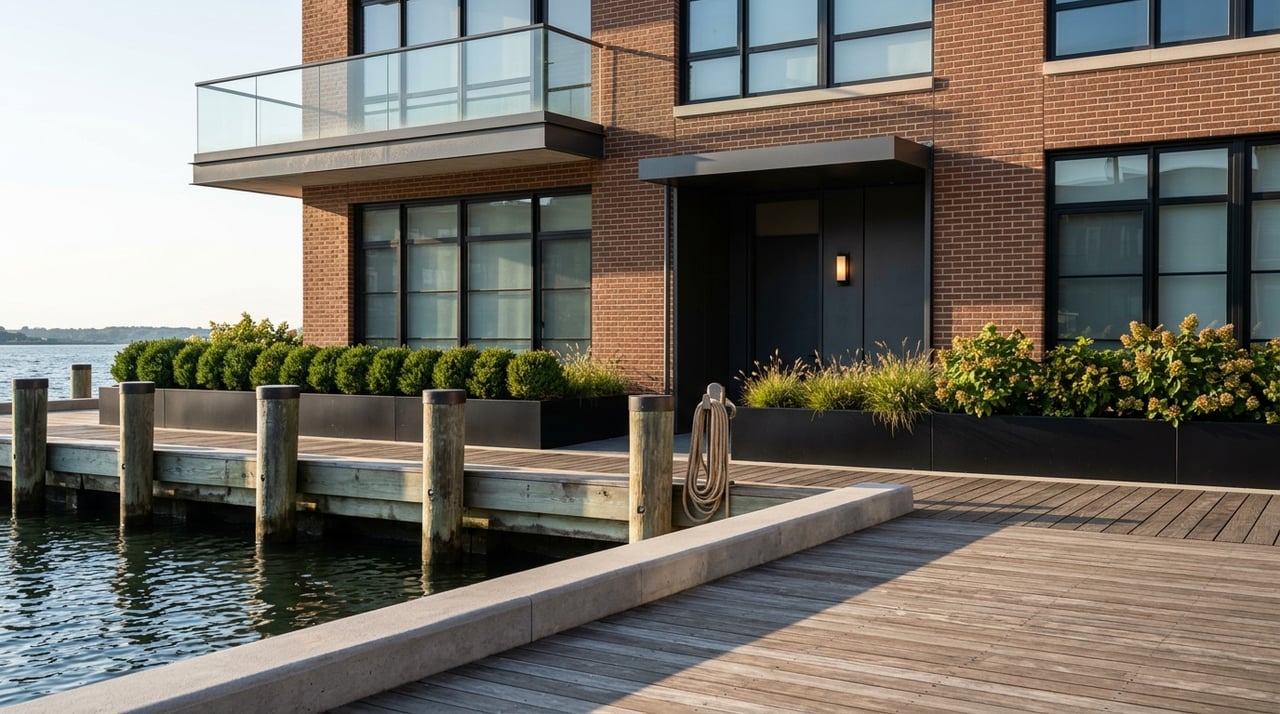
In some places, the water is mostly a backdrop. In Annapolis, it is part of how the city functions and how people spend their time.
The harbormaster oversees more than 17 miles of shoreline, along with public and private moorings, bulkhead, and slips at City Dock. Ego Alley is not just a scenic name you hear on a brochure. It is an active part of the harbor where boaters can dock and dine.
That matters if you are trying to picture your life here beyond closing day. The waterfront contributes to the city’s pace, traffic patterns, recreation, and social life, especially in warmer months when water taxis are in service and harbor activity picks up.
Outdoor living goes beyond boating
A lot of people associate Annapolis with sailing and marina life, but year-round living here also includes substantial access to parks and trails. The City of Annapolis lists 40 parks and trails across more than 200 acres of parkland.
That means outdoor time is not limited to the harbor. You have options for walking, relaxing, and getting outside even if your lifestyle is more land-based than boat-based.
Quiet Waters Park adds another layer to that outdoor appeal. Anne Arundel County notes that the park includes 340 acres, paved trails, playgrounds, a dog park and beach, a cartop boat launch, concerts, and ice skating.
For buyers comparing Annapolis to other communities, this mix is worth noting. You get the Chesapeake setting, but you also get everyday green space that supports routines throughout the year.
Arts and dining stay part of the routine
Living in Annapolis year-round means the city’s cultural life is not just for visitors. The Arts District on West Street includes dozens of restaurants, galleries, and music venues, helping create a weekly rhythm that extends beyond the waterfront.
From May through November, the First Sunday Arts Festival adds another layer of activity. Maryland Hall also supports year-round arts programming with classes, exhibitions, performances, and resident arts offerings.
That gives Annapolis a more complete feel than a place that depends only on seasonal tourism. Even when the weather cools down, there are still indoor experiences and local gathering places that keep the city engaged.
The seasons shape the city differently
If you live in Annapolis full time, you will notice that the city has a distinct seasonal cadence. Spring through fall tends to feel especially active downtown, with major public events at City Dock such as the Annapolis Spring Sailboat Show, Fourth of July celebrations, parade days, and New Year’s Eve pyrotechnics.
The Arts District also peaks around the First Sunday Arts Festival season from May through November. During those months, the city often feels especially social and outward-facing.
Winter is different, but not dormant. The rhythm shifts more toward indoor arts, dining, and civic life, which can make the city feel calmer without losing its identity.
The climate helps support that balance. NOAA climate normals for Annapolis show average July highs around 86.0 degrees Fahrenheit, average January lows around 29.8 degrees, and about 43.99 inches of annual precipitation.
In practical terms, that points to warm summers, cooler winters, and an outdoor lifestyle that stays relevant for much of the year. It is a coastal Mid-Atlantic pattern, not an extreme four-season climate.
Getting around is easier than many expect
Because Annapolis is compact, local movement can feel more manageable than in larger metro areas. Annapolis Transit provides fixed routes, shuttle service, ADA paratransit, a free downtown shuttle, a state shuttle from Navy-Marine Corps Memorial Stadium to the central business district, and Go! Time on-demand transit within the city service area.
For regional travel, the city also points residents to the free BWI Express, MTA commuter buses to Baltimore and Washington, DC, and access to New Carrollton Metro, Penn Station, and Union Station. If you split your time between Annapolis and the broader region, that connectivity can be useful.
This is one reason Annapolis appeals to people who want a distinct local lifestyle without feeling cut off from larger job centers and transportation networks. You get a place with its own identity, while still maintaining practical regional access.
Who tends to enjoy Annapolis most
Annapolis can be a strong fit if you want a compact city with real character and a visible connection to the water. It may especially appeal to buyers who value boating access, historic architecture, walkable local districts, and a more maritime setting than a typical suburb offers.
It can also work well if you want a small-city environment with commuter options into the broader Baltimore-Washington region. The mix of waterfront activity, civic institutions, neighborhood variety, and arts programming gives the city a layered feel that many buyers find hard to replicate.
The key is understanding that Annapolis is not one-note. Some blocks feel lively and visitor-facing, others feel local and residential, and some offer a blend of both.
What to consider before you buy
If you are thinking about making Annapolis your home base, it helps to focus on lifestyle fit as much as the property itself. A beautiful home can still be the wrong match if the surrounding routine does not align with how you actually want to live.
As you explore the city, think about questions like these:
- Do you want to be able to walk to restaurants, shops, and the harbor?
- Do you prefer a quieter neighborhood feel with local businesses nearby?
- How important is water access to your everyday life?
- Would you use parks and trails regularly?
- Do you expect to commute into Baltimore, Washington, or elsewhere in the region?
- Are you drawn to historic housing, or do you prefer a more updated or low-maintenance option?
Those questions can help you narrow not just whether Annapolis is right for you, but which part of Annapolis makes the most sense.
Annapolis year-round is charming, but it is also practical, active, and surprisingly varied for its size. If you are looking for a place where waterfront scenery, neighborhood identity, and everyday convenience all play a role, this city offers a lot to consider.
If you are thinking about buying or selling in Annapolis or the surrounding corridor, V.V. Parker can help you evaluate neighborhoods, lifestyle fit, and the strategy behind your next move.
FAQs
What is daily life like in Annapolis year-round?
- Daily life in Annapolis blends waterfront activity, local neighborhood routines, parks, dining, arts, and civic landmarks within a compact small-city setting.
Is Annapolis only busy during tourist season?
- No. Spring through fall is especially active downtown, but winter still brings dining, arts programming, and civic activity that keep the city engaged year-round.
What neighborhoods shape everyday living in Annapolis?
- Main Street, City Dock, Maryland Avenue, the Arts District, Eastport, and West Annapolis are key areas that shape how residents experience the city day to day.
Does Annapolis offer more than waterfront recreation?
- Yes. In addition to harbor access, the city has 40 parks and trails on more than 200 acres, and Quiet Waters Park offers 340 acres with trails, playgrounds, a dog park, concerts, and ice skating.
Is Annapolis a good option for commuters?
- Annapolis offers local transit services and regional connections to Baltimore, Washington, DC, BWI, New Carrollton Metro, Penn Station, and Union Station, which can help buyers who need broader access.
What makes Annapolis different from a typical suburb?
- Annapolis stands out for its compact scale, maritime setting, historic downtown, harbor-centered lifestyle, and the visible influence of the state capital and Naval Academy.